
Healthcare Conference Entertainment in Western Canada
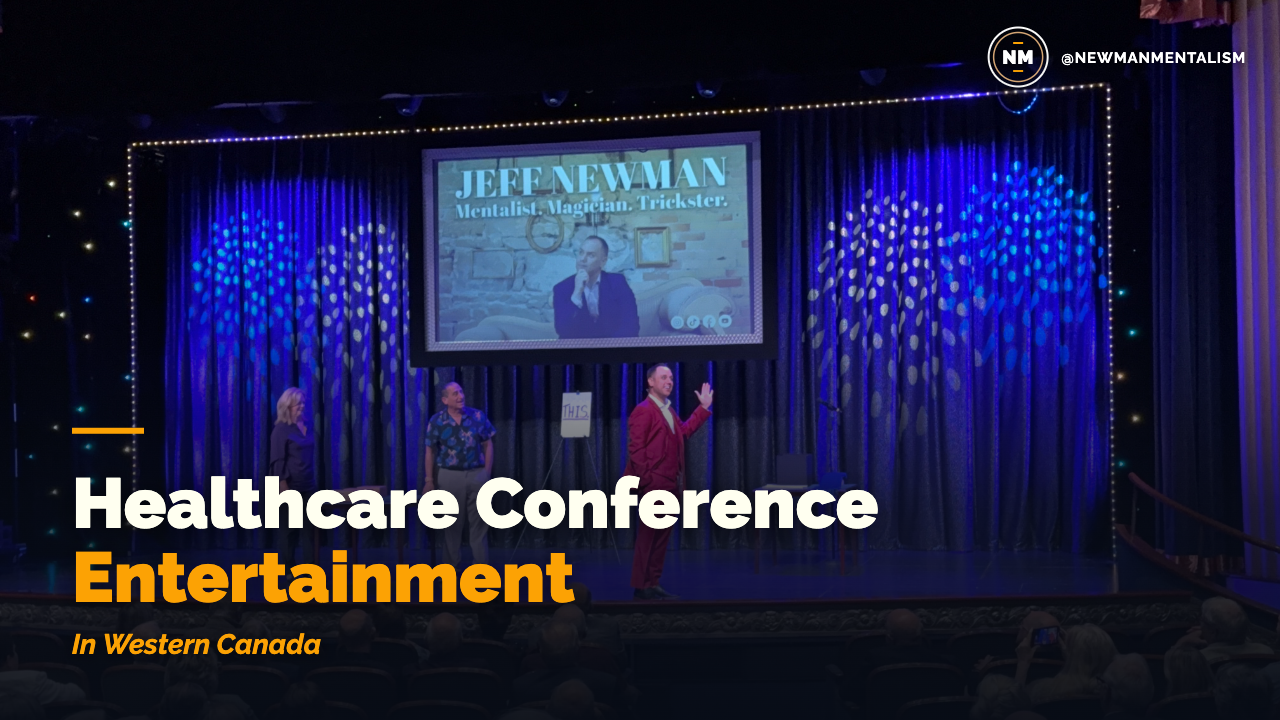
Healthcare conferences are one of the most specific corporate audiences I’ve performed for, and one of the most rewarding to get right.
Doctors, nurses, hospital administrators, pharma sales teams, medical association members. These are smart, time-poor, well-educated rooms with limited tolerance for entertainment that condescends to them. They also have some of the highest discretionary budgets in the corporate event calendar and some of the strictest expectations about how that budget gets spent.
I’ve worked Alberta Health Services events, hospital appreciation evenings, pharma sales kickoffs, and association galas across Western Canada. The healthcare audience consistently outperforms expectations when the booking is right. When the booking is wrong, no audience punishes a misfire harder.
Let’s walk through how to think about it.
What Makes the Healthcare Audience Specific
Three things matter about a healthcare audience.
They’re smart and used to being treated that way. Medical professionals have spent a decade or more of intensive training to be in the room. They detect condescension instantly. Entertainment that plays to the lowest common denominator reads as insulting. Entertainment that treats the room as adults rewards everyone, including the planner.
They’re tired. Healthcare professionals are some of the most overworked corporate audiences in Canada. They arrive at the conference exhausted, often having taken time off from clinical work to attend. They don’t have energy for entertainment that demands a lot from them. They have energy for entertainment that brings the energy.
They’re paying attention to what’s appropriate. Healthcare rooms have specific rules about what counts as professional behaviour, especially when the room includes patients’ family members, pharma reps, association leadership, and senior administrators in the same audience. Anything edgy reads as a problem. Clean by default is not negotiable.
What Works at a Healthcare Conference
A few things consistently land.
Smart entertainment. Audiences that read journals for a living respond to entertainment that has some intellectual texture. A clever performance routine, a well-built piece of stagecraft, a moment that requires the audience to follow along. Healthcare audiences engage with this enthusiastically.
Energy that matches their reserves. This sounds backwards, but a tired audience often needs entertainment that brings energy without demanding it. A performer who carries the energy from the stage gives the room the boost. A performer who expects the audience to give them energy will fight a room that has nothing left to give.
Crisp pacing. Healthcare events run on tight schedules. Sessions overlap. Plenaries run long. The entertainment slot is short and squeezed. A performer who can deliver in 25 to 40 minutes without padding is doing the planner a service. A performer who needs an hour to warm up is doing the opposite.
Clean every time. Material that would be tolerated at a sales kickoff can torpedo a healthcare conference. The audience composition is more sensitive. Senior administrators sit next to junior nurses sit next to pharma reps sit next to academic researchers. Material that works for one segment can alienate another. Universal-clean is the safe register.
Format flexibility. Healthcare conferences vary widely. From a 100-person association annual general meeting to a 1,500-person provincial nursing conference. From a casual hospital appreciation evening to a black-tie medical society gala. Booking a performer who works across formats matters more in this sector than most.
Mentalism, for what it’s worth, suits healthcare audiences well. The format is built around treating the audience as smart, it carries its own energy without demanding the room give it back, and it can flex from 25 minutes to 60. But the criteria above apply regardless of format. Hire by criteria.
Common Healthcare Event Types
A few types of healthcare events I see most often.
Hospital appreciation nights and recognition dinners. Internal events where the hospital or health authority celebrates staff, board members, donors, or long-service awards. Often a black-tie or business-formal dress code. A 25 to 40 minute set fits between dinner and the formal recognition program.
Medical association annual general meetings. Conference-format events with educational sessions, business meetings, and a closing social or banquet. Entertainment usually slots into the banquet or closing reception.
Pharma sales kickoffs. Closer to a standard sales kickoff than other healthcare events. The audience is more uniform (pharma sales reps), the budget is high, the energy is higher than most healthcare audiences, and the format leans toward headline entertainment after dinner.
Nursing recognition and graduation events. Often academic-flavoured, with formal programs honouring graduates or long-service nurses. Entertainment should match the formal tone.
Health authority annual leadership events. Senior administrators, board members, occasionally elected officials. The dress code is formal, the program is structured, and the entertainment has to fit alongside speeches and recognition.
For more on how to think about entertainment that complements a formal program with awards and speeches, see the Award Ceremony Entertainment piece.
Where Entertainment Fits in the Program
The slot depends on the event type.
Welcome reception. Roving entertainment during cocktails. Close-up performance that works the room. Functions as an icebreaker and warm-up.
Between dinner and the formal program. The most-used slot. A 25 to 40 minute headline set bridges the gap between dessert and the formal recognition or business meeting portion.
Closing the program. A short set that ends the formal portion of the night before mingling. Works at events where the program runs on time.
Pre-keynote or pre-plenary opener. Some healthcare conferences open major sessions with a brief performance. Short, sharp, 10 to 15 minutes. The right performer can use this to warm a room for a major speaker.
During lunch. Almost never works at a healthcare conference. The audience is eating, networking, and using lunch as recovery from the morning. Entertainment fights that and loses.
Common Healthcare Event Entertainment Mistakes
Patterns I’ve seen repeat.
Booking entertainment that doesn’t respect the audience’s intelligence. A performer whose material assumes the audience needs broad humour will lose the room. Medical audiences notice and remember.
Underestimating the program drift. Healthcare conferences run over almost every time. The entertainment slot can get squeezed by 30 minutes without warning. Booking a performer who has to deliver a fixed-length set is a planning risk.
Letting the entertainment compete with the awards. Many healthcare events have recognition components (long-service awards, top researcher awards, hospital staff recognition). The entertainment should support these moments, not steal focus from them.
Hiring on price. Healthcare conferences have real budgets, and the audience is high-stakes. Underbooking on entertainment is the wrong place to save money. The cost of a flat evening at a major medical association event lingers in the planning committee’s memory for years.
Forgetting the partners. Many healthcare events include partners or family members at the gala component. Material that requires medical-insider knowledge will alienate the non-medical attendees. Universal material lands better.
Questions to Ask Before You Book
A short healthcare-specific vetting list:
Have you performed at healthcare conferences or medical association events specifically? If they haven’t, the closest comparable matters.
Can your set flex 15 to 30 minutes either direction? Healthcare events drift more than most.
Are you universally clean and PG by default? The answer should be yes without hesitation.
Will you brief on our audience composition before the event? A pro asks.
Do you have video from a comparable event? Comparable matters.
Are you insured? Yes, with a certificate available on request.
How do you handle audience interaction in rooms that include senior administrators or board members? The right answer involves judgment and care, not “everyone loves being on stage.”
A Few Notes on Western Canada Healthcare Venues
The big rooms used most often for Western Canada healthcare events.
Edmonton Convention Centre, Shaw Conference Centre, and Telus Convention Centre Calgary. The major convention spaces used for provincial and national medical association conferences.
The Hyatt Regency Calgary, Fairmont Palliser, Westin Calgary, and Westin Edmonton. The premium hotel ballrooms for hospital gala events and senior leadership recognition.
University of Alberta and University of Calgary medical school facilities. Used for academic conferences and graduation events with their own logistics.
Smaller hospital and authority venues. Internal recognition events sometimes happen at the institution itself rather than a hotel ballroom. AV is more variable. Worth confirming with the performer in advance.
Hire for the Audience
A healthcare conference is one of the highest-stakes corporate audiences in Western Canada. The audience is smart, tired, time-poor, and exacting. The entertainment that works for them is the entertainment that respects all four of those things.
If you’re planning a healthcare conference, medical association event, hospital recognition night, or pharma sales kickoff in Western Canada and you want entertainment that fits the room, I’d love to hear about your event. Tell me about it on the corporate entertainment page, and we’ll see if I’m the right fit.
