
University and College Event Entertainment: From Orientation to Year-End
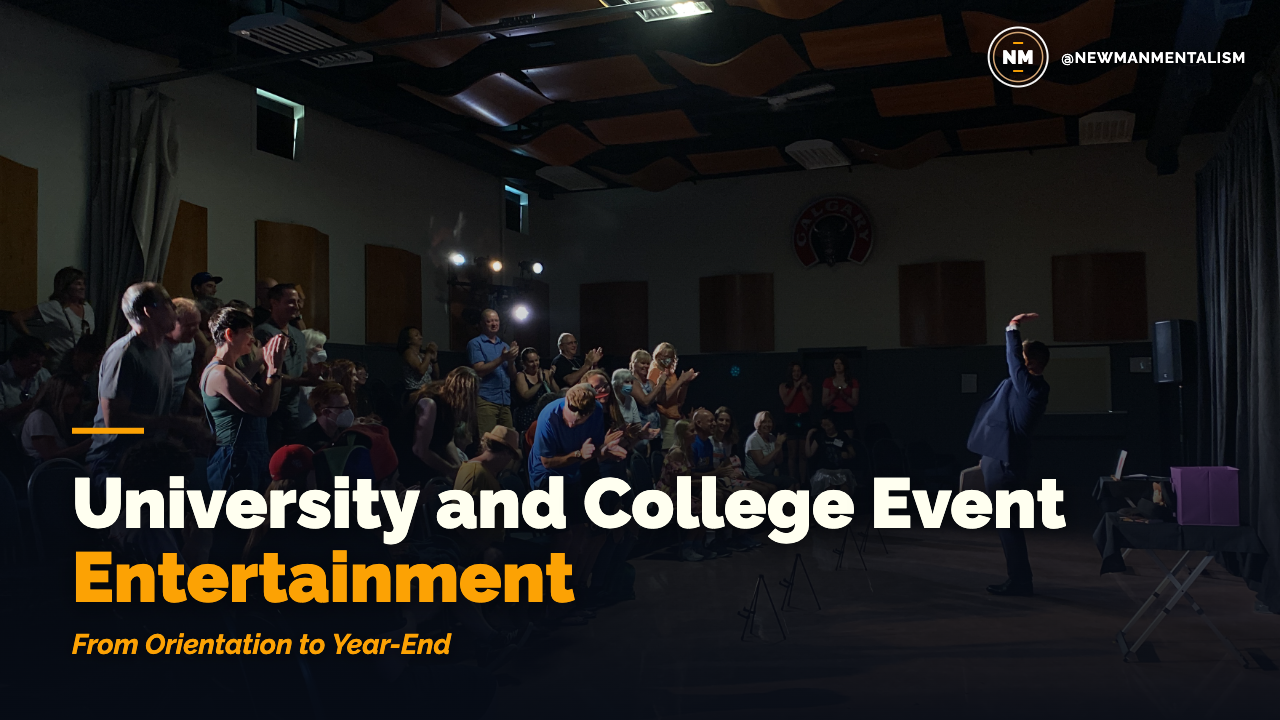
University and college events are one of the most distinct corporate event markets in Canada.
A different audience profile (students, faculty, alumni, donors, parents). A different calendar driven by academic terms rather than fiscal years. Different budget cycles. Different goals (build community, celebrate milestones, raise funds, attract students) than internal corporate events.
I've performed at orientation events, year-end celebrations, alumni events, donor recognition, and student leadership conferences across Canadian campuses. The campus market rewards entertainment that understands the format. Here's the lay of the land.
What Makes the Campus Event Market Specific
A few patterns hold across most campus events.
The audience is varied across event types. Student-facing events (orientation, year-end, formals, frat and sorority events) have one audience profile. Alumni and donor events have a completely different one. Faculty recognition events are different again. The same campus runs multiple event types with different bookings.
The calendar runs on academic terms. Major event windows: late August through October (orientation, welcome events), November through December (year-end), January through March (winter term events), April through May (graduation, year-end celebrations), and summer (alumni events, donor cultivation).
Budgets vary widely by event type. Student union and student-government-funded events run on tighter budgets. Alumni offices, advancement, and donor relations have meaningful event budgets. Faculty recognition events fall in between. The performer fit varies by which office is booking.
The decisions are often committee-driven. Many campus events get booked by committees rather than single planners. The vetting can be slower and the process more collaborative. Performers who understand this will price the time investment appropriately.
Bookings often book several months out for major events. Orientation and graduation events are scheduled a year ahead. Alumni recognition events similarly. Performers familiar with the campus rhythm plan accordingly.
Common Campus Event Types
A few event types I see most often.
Orientation and welcome events. Late August and September. Student-facing, high-energy, sometimes evening events with entertainment as a marquee element. The audience is incoming first-years plus upper-year volunteer leaders.
Year-end and student appreciation events. April or May. Student-facing celebrations of the academic year. Often hosted by the student union, residence councils, or specific faculty associations.
Graduation receptions and parties. April, May, and June. Graduate, parent, and faculty audience. Often formal, sometimes mixed-audience evening events.
Alumni recognition and reunion events. Throughout the year, with peaks in fall and spring. Audience is alumni plus current senior administrators. Often higher-end format.
Donor cultivation and recognition events. Throughout the year. Audience is high-net-worth donors plus advancement staff. High brand stakes, conservative tone.
Faculty recognition and retirement events. Year-round. Audience is faculty and senior administrators. Formal tone, often academic-flavoured.
Student leadership conferences and training events. Throughout the year. Sometimes residence advisor training, sometimes student government retreats, sometimes leadership society conferences.
Frat, sorority, and student club formals. Vary widely. Higher-energy, social, less formal.
What Works at Campus Events
The right entertainment depends on the audience.
For student-facing events: Interactive, high-energy, format-flexible entertainment that connects with audiences ages 17 to 24. Mentalism is excellent for this audience because the format is interactive, smart, and creates moments that get shared on social media after. Comedy works when the comedian is clean and connects with the demographic. Hypnosis is a perennial favourite at student events.
For alumni and donor events: Smarter, more polished entertainment. The audience is professional, often senior, and used to corporate-level performance. Mentalism, polished corporate comedy, or sophisticated stage entertainment fit. High-energy student-style entertainment does not.
For faculty events: Smart, dignified entertainment. The audience is academic and engaged. They reward texture and depth.
Clean is the default. Student events tolerate slightly more edge than corporate audiences, but campus brand sensitivity is real. PG-appropriate is the safe register everywhere.
Format flexibility matters. Campus events vary wildly in scale and tone. A performer who can do close-up at a small reception plus a stage show at orientation gives the campus multiple booking options.
Mentalism, as a format, suits campus events well across audience types. The format scales from intimate alumni dinners to large orientation events, treats the audience as smart, and creates social-media-worthy moments. But the criteria above apply regardless of format.
Where Entertainment Fits
The slot depends on the event type.
Orientation events. Often a marquee evening event with entertainment as the centerpiece. A 45 to 60 minute stage show after the welcome ceremony.
Year-end celebrations. Similar to orientation. Stage show after dinner or the formal portion.
Graduation receptions. Variable. Sometimes roving entertainment during a cocktail reception, sometimes a short stage performance during the formal portion.
Alumni events. Usually after dinner. Format varies.
Donor events. Sophisticated format. Often cocktail receptions with roving entertainment plus a short stage moment.
Faculty events. Often more academic in tone. Short, dignified entertainment fits.
Common Campus Event Mistakes
A few patterns I've seen go wrong.
Booking the same act for different campus audiences. A performer who's perfect for orientation may be all wrong for a donor event. Campus events are not interchangeable.
Underestimating brand sensitivity at student-facing events. Universities and colleges are increasingly attentive to brand expression. Entertainment that creates a controversy lands harder than at a corporate event.
Booking on price for orientation events. Orientation is the biggest single touchpoint with incoming students for many campuses. Underbooking on entertainment to save money against an audience of 1,000 first-years is a strange trade-off.
Mixing the wrong format with the wrong audience. A hypnosis show that humiliates volunteers at an orientation event becomes a controversy. Roving close-up at a large stage event reaches a tiny fraction of the audience. Format-audience fit matters.
Forgetting the committee process timeline. Campus committee decisions take longer than corporate decisions. Performers should expect a longer booking cycle and plan accordingly.
Booking Lead Times for Campus Events
Realistic lead times.
Orientation events. Book by February or March of the same calendar year. The major touring performers for the student event circuit lock fall schedules early.
Graduation and year-end events. Book in October or November of the prior fall.
Alumni and donor events. Six to twelve months out for major events.
Faculty and academic events. Vary widely. Three to six months works for most.
Student club and frat/sorority formals. Often book three to four months out, sometimes less.
Questions to Ask Before You Book
A short campus-specific vetting list.
Have you performed for [our specific audience type] before? Specifics matter.
Are you clean and PG-appropriate by default? Yes, with examples.
How do you handle audience interaction at events with younger or older audiences specifically? The answer matters for the specific event.
Can you flex 15 to 30 minutes either direction?
What's your tech rider, and have you worked at our venue before?
Are you insured?
Will you brief on our institution, our specific audience, and the goals of the event?
A Few Notes on Major Canadian Campuses
Many Canadian universities and colleges run multiple event types per year. Major institutions in Western Canada include the University of Alberta, University of Calgary, University of British Columbia, Simon Fraser University, University of Victoria, University of Saskatchewan, University of Regina, and University of Manitoba. Each has its own event culture, calendar, and booking process.
Smaller and specialized institutions (Mount Royal University, Royal Roads University, Athabasca University, MacEwan University, regional colleges, and others) run their own calendars at their own scale.
The right entertainment booking depends on the specific institution, the specific office booking, and the specific event.
Hire for the Audience and the Institution
Campus events are one of the most varied corporate event markets in Canada. The audience, the calendar, the budget, and the goals all vary by event type. Booking on autopilot doesn't work. Booking by audience fit and event purpose does.
If you're planning a university or college event in Western Canada, or anywhere in Canada, and you want entertainment that fits the audience and the institution, I'd love to hear about your event. Tell me about it on the corporate entertainment page, and we'll see if I'm the right fit.
