
What Makes Corporate Entertainment “Clean” (and Why It Matters for Your Brand)
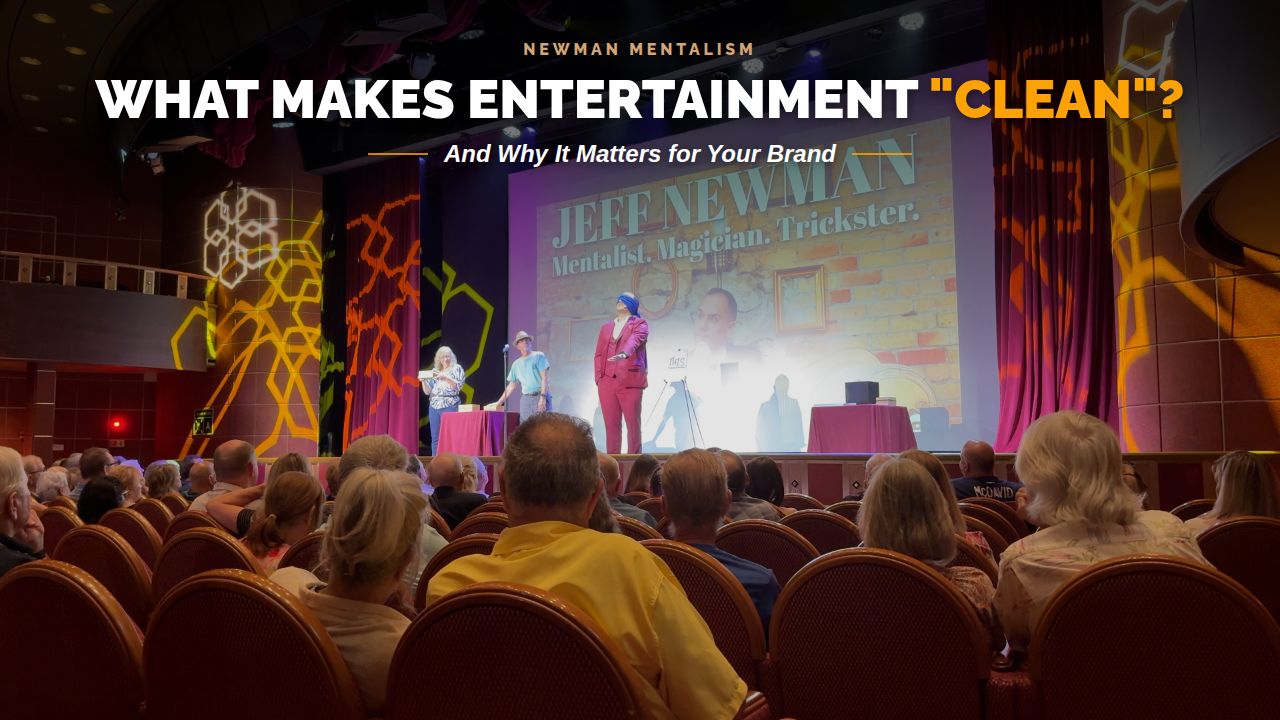
There’s a specific moment of terror that comes with booking entertainment for a work event. It’s not when the show starts. It’s about four minutes in, when the performer sets up their first big joke and you, the person whose name is on the booking, suddenly realize you have no idea what’s about to come out of their mouth.
If it lands, you’re the hero who found the great act. If it’s a joke about someone’s wife, a political jab, or something crude enough to make the VP of HR set down her drink, you’re the one who booked that. Fair or not, that’s how it works.
That’s why “clean” is one of the most searched words in corporate entertainment. But clean is also one of the most misunderstood words in the industry, and plenty of acts that advertise it deliver something that misses in the other direction. So let’s define it properly, give you the tools to make sure you’re getting it, and walk through exactly how to check whether an act is as clean as it claims to be.
What “Clean” Actually Means
Clean, in the corporate entertainment sense, is pretty simple to define: no profanity, no crude or sexual material, no politics, no religion, and nothing that punches down at anyone in the room. Nothing you’d be uncomfortable watching next to your CEO, your newest hire, and your biggest client at the same table (because at a corporate event, that’s often exactly the seating arrangement).
The technical term event planners sometimes use is “corporate-friendly” or “PG.” But the spirit of it matters more than the rating: a clean show is one where every single person in the room can relax, because nobody’s wondering if they’re about to become the punchline.
What “Clean” Doesn’t Mean
Here’s the misunderstanding: clean does not mean childish.
Some performers hear “keep it clean” and swing all the way to birthday-party energy: cartoonish props, forced whimsy, humour aimed at an audience that gets tucked in by eight. For a room full of adults who’ve just come off a workday and a glass of wine, that misses just as badly as the crude stuff. It doesn’t offend anyone, but it doesn’t entertain anyone either, and your team spends the show checking their phones.
The best corporate entertainment lives in the space between: material that’s smart, quick, and genuinely surprising for adults, with nothing in it that could land wrong. Clean and sophisticated aren’t opposites. Getting both at once is the actual skill.
Why It Matters More at a Corporate Event
At a comedy club, edgy material is the point. Everyone bought a ticket knowing what they signed up for, and if a joke goes too far, nobody blames the person sitting next to them.
A corporate event is the opposite arrangement, in two ways. First, the audience didn’t choose the act; you chose it for them, which means every reaction reflects on the choice. Second, the room is the widest possible mix of people: different ages, backgrounds, seniority levels, and comfort zones, all sharing tables with people they have to work with on Monday.
That second part is the real issue. An off-colour moment at a work event doesn’t just fizzle, it lingers. It becomes the thing people mention instead of the event itself. While an edgy act at the right venue can be fantastic, a corporate function typically isn’t that venue, and the person who booked the act is the one who wears it.
Clean Includes How Volunteers Are Treated
This part gets overlooked constantly: clean isn’t only about language. It’s also about what happens to the people who end up on stage.
Plenty of acts get their laughs by making a volunteer the joke: embarrassing them, making them do something silly, having fun at them instead of with them. The content might be technically family-friendly, but watching your coworker get humiliated in front of the whole company doesn’t feel clean to anyone, least of all the coworker.
In my shows, audience participation works the other way around. The volunteer is the star of the moment. They walk back to their table to applause, not relieved laughter. If you’re evaluating any performer, watch how the people on stage look when they sit back down. That tells you more than the marketing copy does.
How to Verify an Act Is Actually Clean
“Ask if they’re clean” isn’t quite enough, because nearly everyone says yes. A few checks that actually work:
Watch full performance footage, not just the highlight reel. A demo reel shows the best 90 seconds; you want to see several unbroken minutes in front of a real corporate crowd. I’ve written a full guide on how to evaluate an entertainer’s demo reel that covers exactly what to look for.
Ask them directly: “What’s the edgiest moment in your show?” A seasoned corporate performer will have a specific, reassuring answer, because they know their material cold. A vague “oh, I read the room” is a yellow flag; the room shouldn’t be an experiment.
Ask what happens to volunteers. Have them describe an actual audience moment from start to finish, including how the volunteer comes out of it.
Check where they usually perform. A performer whose calendar is mostly corporate events, conferences, galas, and theatres has been vetted by a hundred planners before you. That track record is hard to fake.
Where Mentalism Fits Into All This
I’ll be upfront about my bias here, but there’s a structural reason mentalism suits corporate audiences: the astonishment doesn’t need shock value to work. The material is the hook. When someone’s exact thought gets revealed on stage, that moment is riveting for the whole room without a single crude joke propping it up.
That’s a different engine than comedy, where the laughs have to come from somewhere and “somewhere” often drifts toward edgy. (If you’re weighing those two formats against each other, I’ve broken down the differences in Mentalist vs. Comedian.) A mentalism show still gets plenty of laughs, but they come from the situations and the reactions, not from material that needs a content warning.
My own show is clean by design, and built for adults: smart, quick, and interactive, with nobody embarrassed and nothing you’d have to explain to HR afterward. Not because someone asked me to tone it down, but because that’s the show I actually want to do.
Frequently Asked Questions
Is clean entertainment less funny?
Not when it’s done well. The laughs just come from a different place: the situations, the reactions, the impossible moments, rather than material that needs a disclaimer. A room laughing together at something astonishing tends to laugh harder than a room laughing nervously at something risky.
What if our team actually likes edgy humour?
Then edgy humour might be great for them, at the right outing. A comedy club night with a self-selected group who opted in is a completely different situation than a company event where attendance is expected and clients or spouses are in the room. It’s less about whether your team can handle it and more about whether every single person there chose it.
Is a “PG” show going to feel like a kids’ show?
No, and that distinction is the whole point of this article. PG describes the content, not the audience. My show is written for adults: the pacing, the humour, and the material all assume a room full of grown-ups. There’s simply nothing in it that anyone has to apologize for afterward.
Is your show safe for a holiday party with spouses and clients attending?
Yes. Mixed rooms are exactly what the show is built for. The wider the range of people at the tables, the more valuable it is that nobody on stage is gambling with the content.
Where That Leaves You
Clean corporate entertainment isn’t about playing it safe or dumbing it down. It’s about removing the one variable that can turn a great event into an awkward memory, while keeping everything that makes a show worth watching in the first place.
So when you’re booking, don’t just ask whether an act is clean. Ask what clean means to them, watch the footage, and check how the volunteers fare. Fifteen minutes of homework buys you a whole evening of not worrying about minute four.
And if you’d rather skip straight to an act where the answer to all of those questions is already on record, get in touch. I’m happy to show you the full footage myself.
